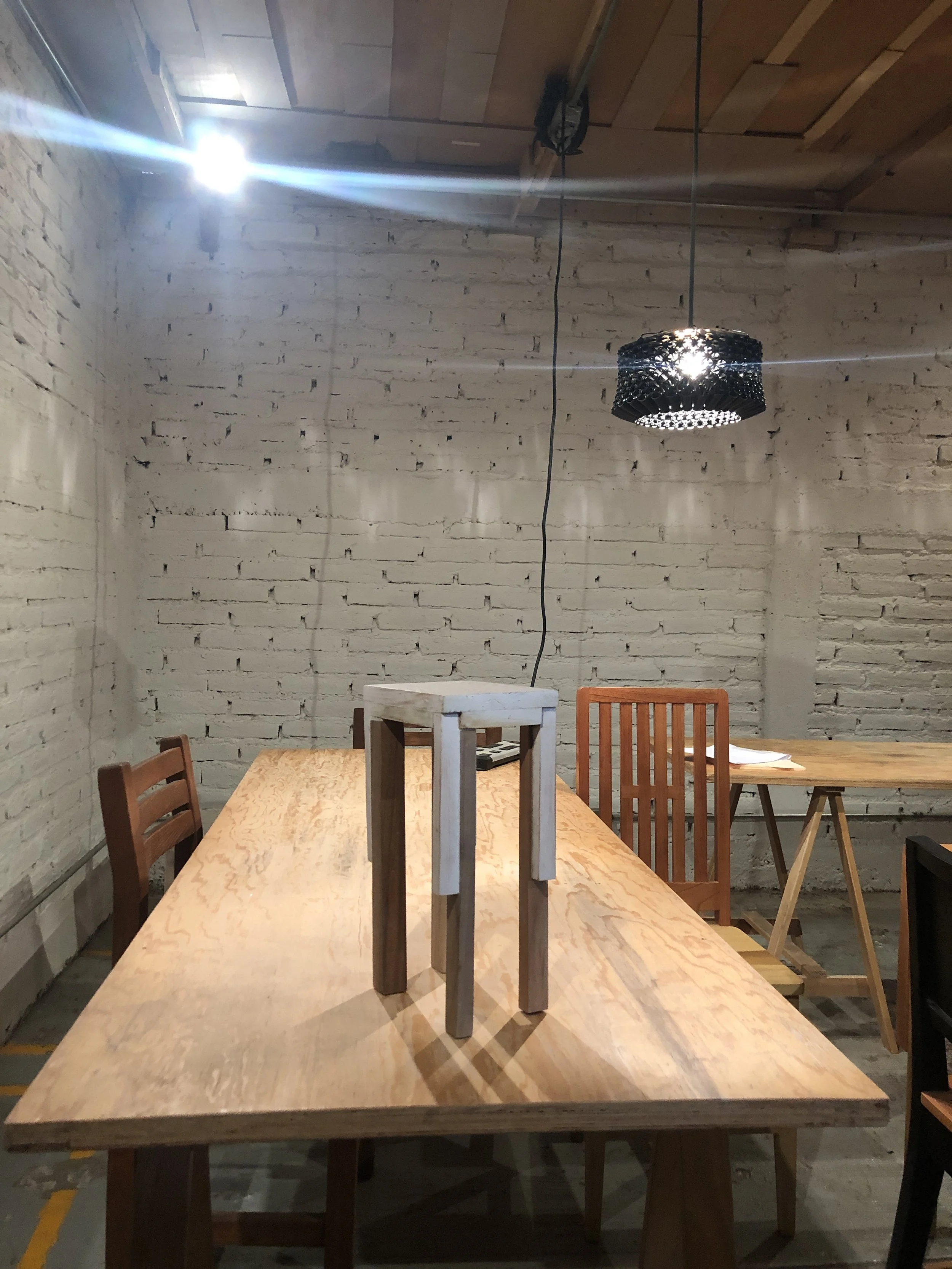
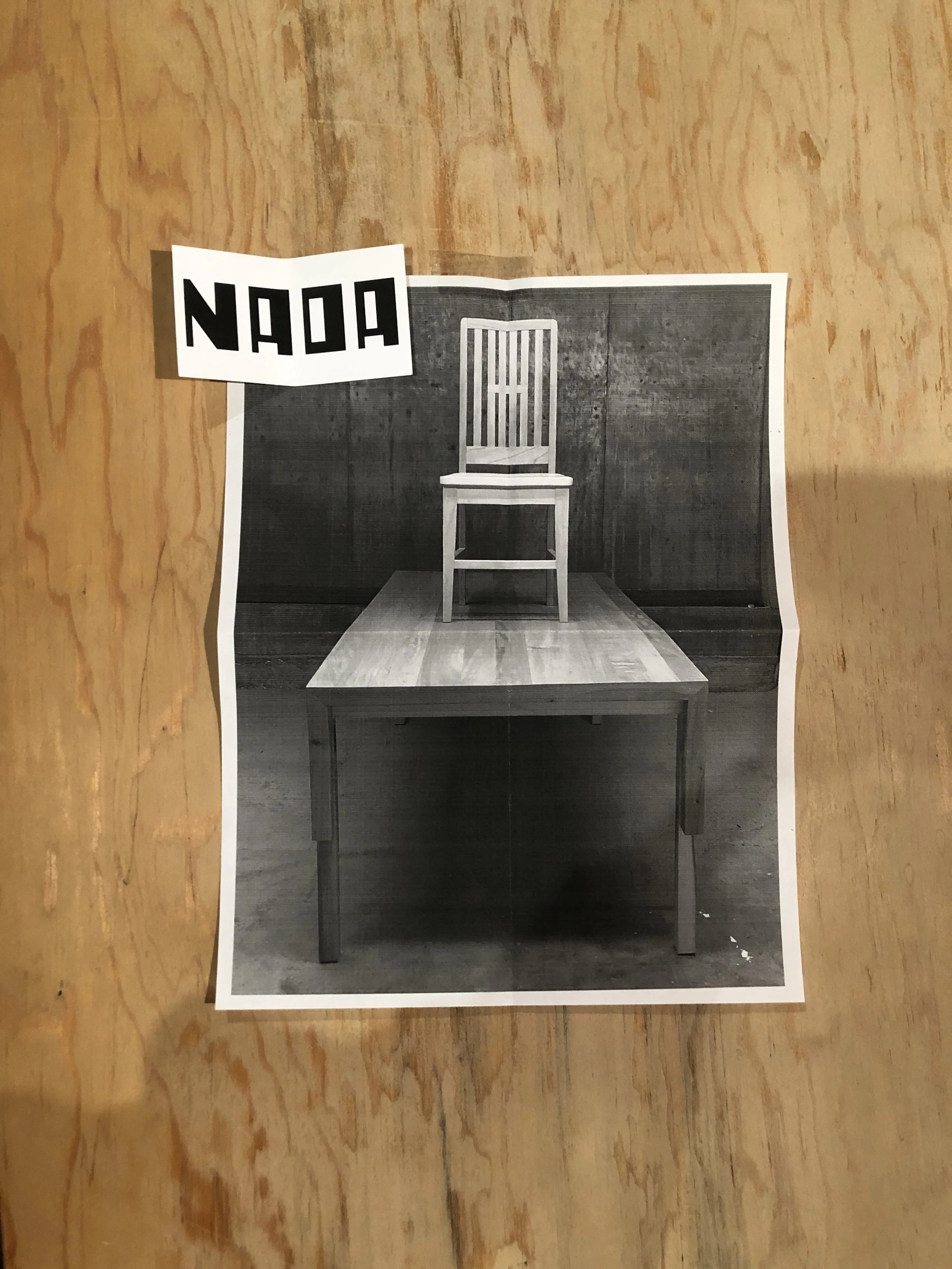
Nada Taller is a collaborative, interdisciplinary workspace founded in Guadalajara by Paula Silva-Ruvalcaba. It operates at the intersection of contemporary art and design practices, in dialogue with craft and publishing, to create objects, furniture, images, and publications. It is also a research platform for developing content and publishing books.
Nada brings together languages, forms of knowledge, and techniques to construct objects as vehicles of relation: between people and history, consumption and sustainability, mind and body, aesthetics and meaning, work and utopia. It is especially interested in the relationships that emerge among matter, memory, perception, and meaning.
Projects may arise from materials, found forms, experiences, or simple gestures. Recovering, gathering, displacing, reflecting, and transforming are some of the operations through which an everyday thing can reveal another aspect of experience.
Each project unfolds as a shared experience and an open-ended process, without necessarily beginning with a predefined outcome. Making is also a way of observing: following a question through materials makes it possible to discover possibilities that are difficult to anticipate before beginning. In this way, materials and gestures of transformation produce knowledge, integrate different ways of knowing, and open up new possibilities for encounter.
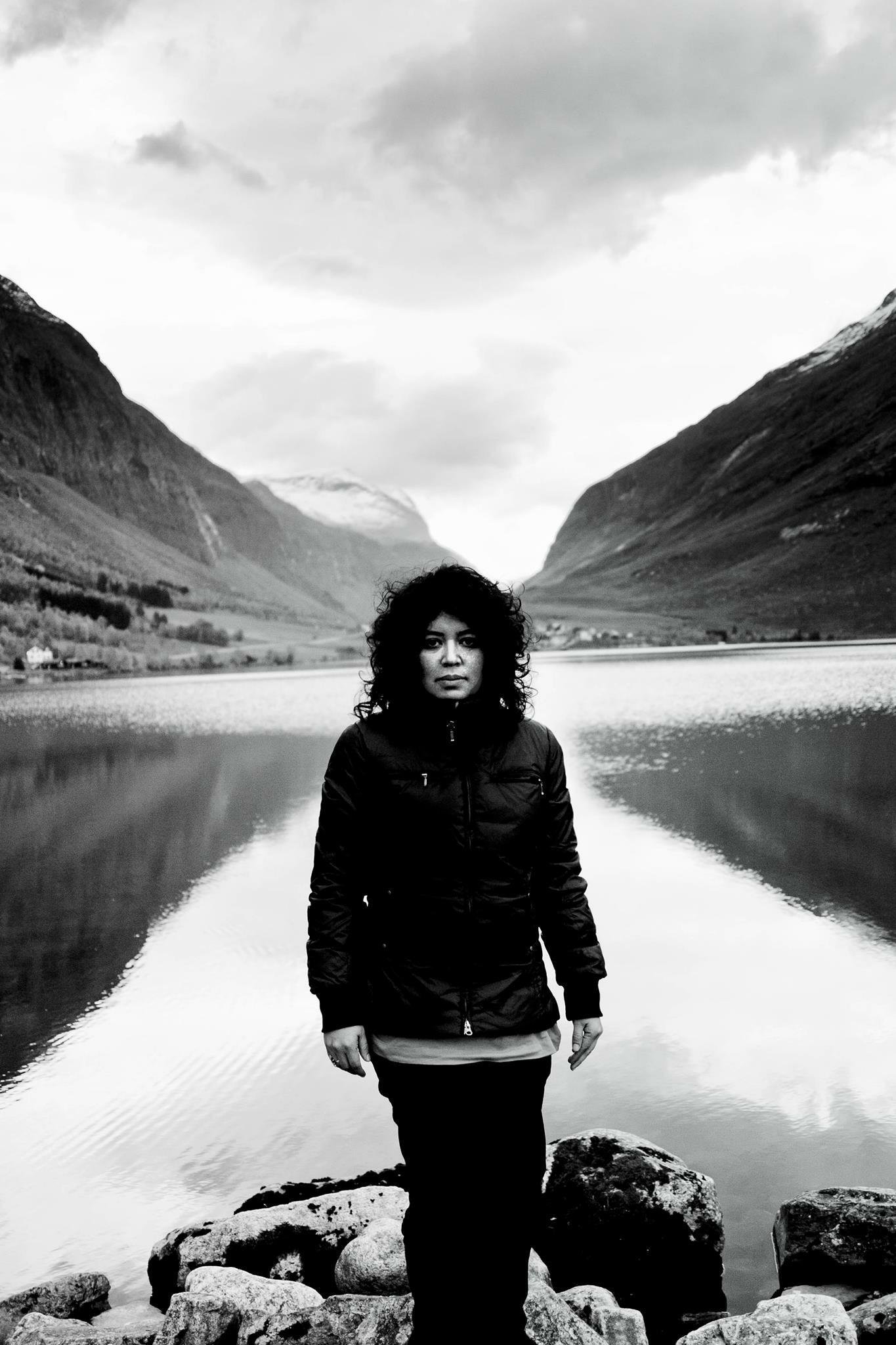
Paula Silva-Ruvalcaba
Paula was born in Guadalajara, Mexico, where she lives and works. Her practice has taken shape across the fields of communication, art, design, material culture, craft, and consciousness studies.
She was born into a family devoted to wood, carpentry, and furniture making. From this context, she approaches the workshop not only as a site of production, but also as a living archive of gestures, inherited knowledge, human relationships, and material transformations.
She studied Communication Sciences at ITESO in Guadalajara from 1992 to 1996 and trained in Ontogonic Body-Mind Therapy with Carlos de León in Vancouver from 2015 to 2019. Her early work centered on documentary filmmaking and audiovisual storytelling before expanding into video art, installation, objects, furniture, writing, and publishing.
Across these different forms, her practice has been shaped by a sustained engagement with consciousness, embodied and transpersonal experience, contemplative traditions, and symbolic systems. These fields subtly inform her approach to the body, perception, meaning, and processes of transformation, while her work remains grounded in a relational and affective dimension.
She was a recipient of the FONCA Young Creators grant in 2004–2005. In 2008 and 2010, she participated in the international workshops at Domaine de Boisbuchet, organized in collaboration with the Vitra Design Museum and the Centre Pompidou, where she encountered the practices of Maarten Baas, Fernando and Humberto Campana, Jerszy Seymour, and Le Bureau de Stéphane Barbier Bouvet.
In 2008, she co-founded Le Porc-Shop (2008-2014) with Rodrigo V. Guerrero, an experimental furniture project through which she explored identity, taste, and design while questioning market trends and the homogenization of consumption.
Her work has been presented in spaces associated with both art and design, including Galería Mexicana de Diseño, Museo de Arte Moderno, MAM, Museo Franz Mayer, and Centro Nacional de las Artes in Mexico City; Museo de Arte de Zapopan, MAZ in Guadalajara; MoMA Design Store and Casey Kaplan Gallery in New York; Paris Design Week at Galerie Joseph Froissart in Paris; and Galerie Verticale–Vidéographe in Montreal. Her projects have been featured in publications including The New York Times, Domus, Designboom, and Dezeen.
She currently develops Nada Taller and Nada Books, and is actively involved in Fábrica de Muebles, the family project founded in 1984, where she collaborates on the development of furniture pieces, projects, and content.